THE INEMBA RITE IN BUGISU UGANDA- EAST AFRICA-WHERE CIRCUMCISED BOYS ARE COMMISSIONED INTO MEN AND GIVEN THEIR CLOTH OF MANHOODREAD ON BELOW
By Richard Wetaya
Friday, march, the 13th was a memorable
day for 15 year old Fred Wanyi of Bunamasongo village, Bushika subcounty, Bududa, Eastern Uganda.
It was a day he was officially clothed in the traditional Bamasaba robe of manhood in full view of his relatives and friends.
Wanyi and many of his contemporaries (Bamakoki) who got traditionally circumcised last year were however fast taken through a revered traditional rite, known as Inemba.
“The Inemba rite is where we bestow upon our circumcised initiates the honor of manhood. We drape them in a traditional animal skin cloth called Isumbati. Inemba officially commissions our initiates as men. It is performed in the odd years immediately after a given circumcision year runs its course. The custom closes our Imbalu ritual cycle which begins in January of every even year with the Isonja dance, then continues in August with the opening of Imbalu and closes with the Inemba dance. We refer to the rite in our folklore as “Khura Umusinde mungubo” or dressing the newly circumcised boys (Batembete) into a manhood cloth. It is after the performance of Inemba that an initiate can marry,” Lawrence Mushiso, an elder in Bunamasongo, explains.

Wanyi and his colleagues had to perform the Inemba as multitudes of residents from Bunamasongo and neighboring villages looked on with glee. It was a spectacle, punctuated with warlike dances and chants.
The night before, Wanyi and his collegues had been taken through the Khukhuyalula rite. “The Khukhuyalula rite is performed on the eve of the Inemba dance. This rite frees our initiates from the impurities of boyhood. It is a coming of age custom that involves the burning of the dry banana leaves or kamasatsa that the initiates slept on during their time in seclusion, right after their circumcision. The burning of the dry banana leaves symbolizes the erasing of the boys past and the opening of a new lease in his life as a man,” explains Patrick Wabuteya, a respected clan elder and head of Inemba in Bunamasongo.
As local folklore dictates, Wanyi and his collegues burnt their dry banana leaves, whilst singing songs that seemed to strike a chord with the relatives.
The popular song “Businde Khwabuwona” meaning we have dispensed with boyhood was sung repeatedly amidst cheers from relatives.
At 10.40 a.m, Wanyi like his older collegues was given a clean head shave by his paternal aunt who also shaved him on the eve of his circumcision last year. Wanyi was circumcised on the 19th of December.
“The shaving rite or khubeka litsune is down in a sacred swamp. The paternal aunt who shaved the initiate on the second day of the three day imbalu rituals is chosen on account of her good behaviour and kindness. The paternal aunt comes into play because we as Bamasaba believe a paternal aunt is more or less like one’s father,” Wabuteya says.
At 12.30 p.m, the long Inemba drum and the accompanying small drum (Indonyi) were brought out of one of the elder’s houses.
The custodians firmly tied them on erected tree branches. All the while buoyant elders, relatives of the initiates and youth elders were merry making, roasting meat and sipping on the local brew, malwa.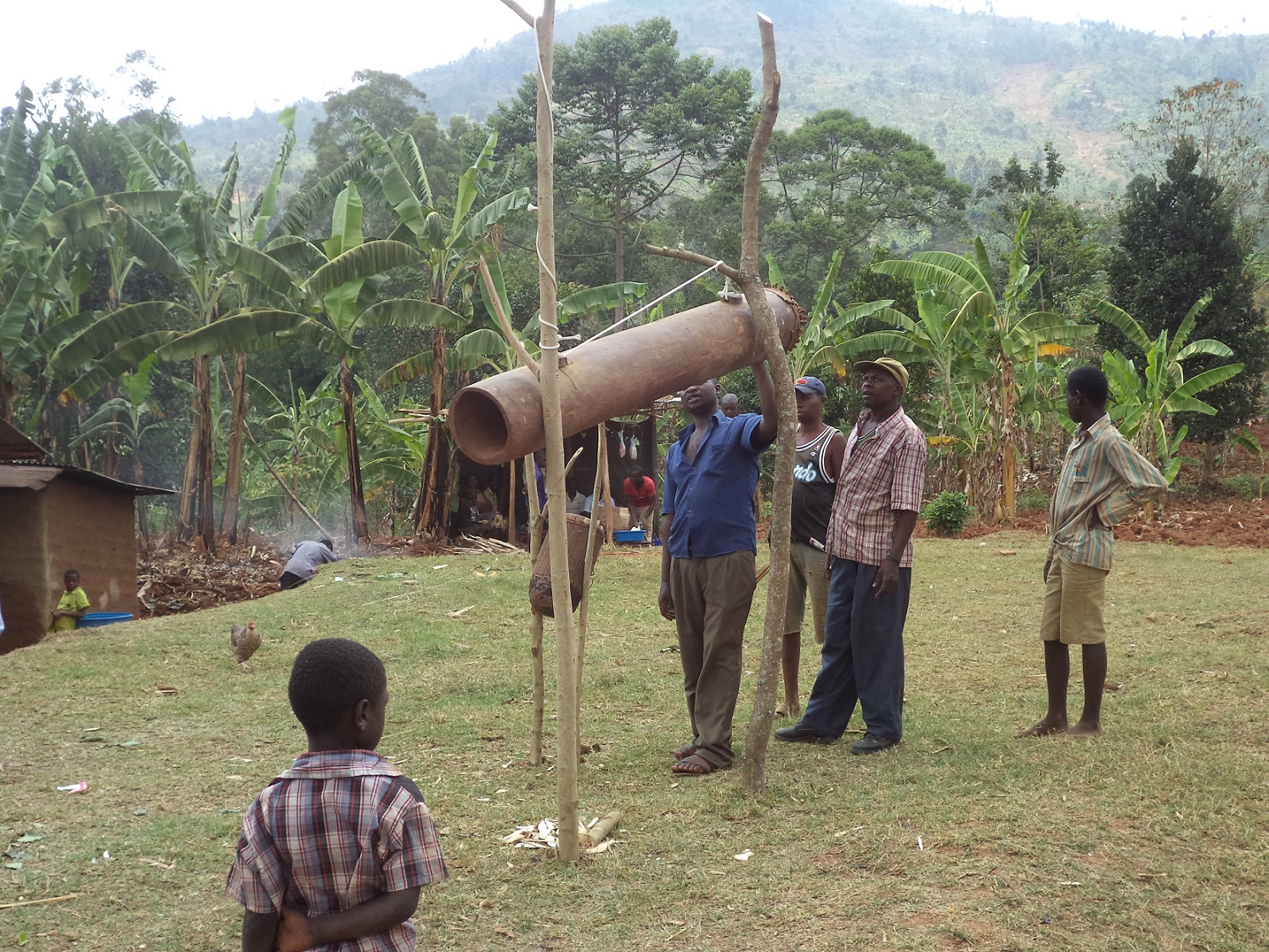
Mushiso says the malwa drinking before the Inemba dance starts symbolizes the welcoming back of the initiates into society after their time in seclusion.
At 2.00 p.m, Wanyi and his collegues from the Bumiko Clan were painstakingly dressed in the Isumbati cloth by Wabuteya.
As he dressed Wanyi, Wabuteya reminded him of his obligations as a man as stressed by his traditional surgeon on the day of his circumcision. Wanyi was reminded about the virtues of hard work, kindness and marriage.
Wabuteya then placed a long drape of libombwe (creeping stem) around Wanyi’s neck. Wanyi stood stock still and attentive, all the while. Around the home, the sounds of the Inemba drums were reverberating.
"The Isumbati is the traditional cloth of the Bamasaba. It is a symbol of the power accorded to one to perform societal rituals like naming offspring, offering sacrifices and performing Imbalu rituals. Being dressed in an Isumbati also means one can now sit with elders and discuss issues of importance. The Libombwe on the other hand brings good luck,” Mushiso says.
Wabuteya presented Wanyi with a gift after. Whoever had a gift for Wanyi was then instructed to first place a wreath of libombwearound his neck before issuing the gift.
“If a candidate is dressed with more creeping stems around his neck as her performs the Inemba dance, it is believed that he got many gifts from his relatives and friends after his circumcision. It is also believed lady luck will shine his way as many times as possible,” Mushiso explains.
At 3pm, Wanyi and his collegues were told to run to a nearby assembling point to meet initiates from other clans who were to perform Inemba in Bunamasongo as well.
Before reaching the designated assembling point however, Wanyi and other collegues from the Bumiko clan had to stop to perform a ritual refered to as “khubwaa tsingubo tsisumbati”. This ritual involves the candidates tightening their traditional robes so that they do not fall off. At the assembling point, elders from different clans had brought together their initiates. Some knelt, some stood in corresponding lines, facing each other. There seemed to be cohesion all around.
The initiates were then instructed to run to the venue where the Inemba rite was to be performed.
At the venue, an ecstatic crowd had gathered and the Inemba drums were blaring loud.
Wanyi and his collegues fully dressed in Tsisumbati (traditional robes of manhood) came running with long brightly colored sticks called tsimbani. The tsimbani ostensibly represent weapons that a Mumasaba man should bear at all times to defend his family, clan and society.
Wanyi and his collegues quickly perforated holes in the ground using the tsimbani before they set forth on the Inemba dance routine.
Wanyi and his collegues led the crowds afterwards in the singing and dancing as the Inemba dance begun officially. They moved back and forth, stamping their feet, shaking their shoulders, twisting their skins and swaying their bodies from left to right.
Wanyi sung songs of victory, pouring scorn on those who thought he would not brave the pain of the Imbalu knife at his young age and those who lacked fortitude to face the knife.
Wanyi and his collegues had now officially finished the transformation process from boyhood to manhood.
INEMBA TABOOS
During the performance of the Inemba rituals, only people possessed with the spirit of Inemba or Kimisambwa kye Inemba are allowed to be touch or play the drums
Initiates who did not dance Inemba in their respective villages are not allowed to witness any Inemba dances.
OTHER INEMBA PRECEPTS
Each and every newly circumcised Mugisu male is supposed to attend the Inemba dance at least once.
If one is not able to make it, they can get a proxy to attend on their behalf.
Read More
When you subscribe to the blog, we will send you an e-mail when there are new updates on the site so you wouldn't miss them.
About the author

By accepting you will be accessing a service provided by a third-party external to http://masaabachronicle.com/
Comments